These patients have increased susceptibility to infections that often involve the lung. Many of these infections are caused by opportunistic organisms that typically do not produce.
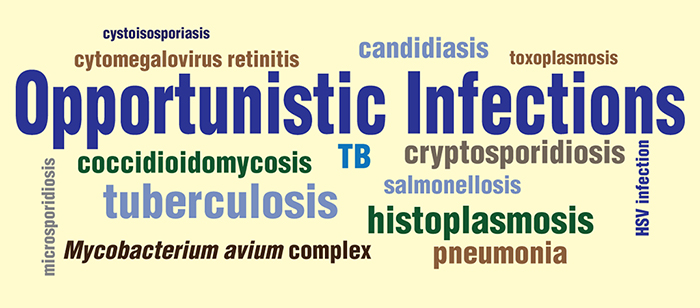
Fact Sheets In Category Hivinfo Nih
Patients with HIVAIDS are prone to opportunistic infections given their immunosuppressed state.
. Toxoplasma gondii is an obligate intracellular protozoan parasite presenting as a zoonotic infection distributed worldwide. It is usually caused by disseminated opportunistic infection and the relative frequency of each cause of FUO is influenced by multiple factors including CD4 count geographic setting and local prevalences of infectious agents which may provide clues to the. Details of Opportunistic infections Tuberculosis TB Tuberculosis is a common opportunistic infection that predominantly affects the lungs.
In healthy immunocompetent individuals it causes asymptomatic. People with HIVAIDS are also more likely to have complications from common illnesses such as the flu. The immune system is weakened due to HIVAIDS cancer chemotherapy.
Thus rapid and early diagnosis of pathogens is. This risk is exaggerated with the weakening of the immune system as the disease progresses. Opportunistic infections OIs are infections that occur more often or are more severe in people with weakened immune systems than in people with healthy immune systems.
You can help prevent infections by taking your HIVAIDS medicines. These parasitic infections are more common among infected cases of human immunodeficiency virus HIV and developed acquire immune deficiency syndrome AIDS12 An estimated nearly 80 of AIDS patients die of AIDS related illnesses including OIPs which usually occurs when CD4 T cell count is below 200 cellsmm3 Although coccidian caused self. Common Opportunistic Infections.
What are the Causes of Opportunistic Infections. In this study the frequency of opportunistic infections including microsporidian and coccidian infections was evaluated in. Leishmaniasis strongyloidiasis and toxoplasmosis are the three main opportunistic causes of systemic involvements reported in HIV-infected patients.
Progressive multifocal leukoencephalopathy PML a virus that affects your brain. Cytomegalovirus infection 142 cases 631 and pneumocystis pneumonia 66 cases 293 were the most frequent opportunistic infections and their prevalence was significantly lower in ART patients than ART - patients. Of these toxoplasmosis is the most important parasitic infection associated with the central nervous system.
These diseases are associated with significant morbidity and mortality in patients with HIVAIDS. Opportunistic parasites have been identified as human pathogens especially in immunodeficient patients. A weakened immune system is the cause of majority of opportunistic infections.
Pneumocystis pneumonia PCP a fungus that causes a deadly lung infection. 1 Opportunistic infections are one of the main causes of morbidity and mortality in HIV patients. Pneumocystis jirovecii formerly Pneumocystis carinii remains the most common opportunistic infection in this group while the incidence of mycobacterial infections has decreased significantly.
People with weakened. Parasitic infections such as crypto cryptosporidiosis and toxo toxoplasmosis Having HIVAIDS can make infections harder to treat. AIDS remains a major global health threat.
This illness is caused by infection with a common and usually harmless type of. Fever of unknown or uncertain origin FUO constitutes a common clinical challenge in patients infected with HIV. Non-Hodgkin lymphoma and Kaposi sarcoma were observed in 301 and 162 of ART - patients and 379 and 152 of ART patients.
How Can HIV and AIDS Be Prevented. Candidiasis of bronchi trachea esophagus or lungs. The spectrum of pulmonary disease that can affect patients with human immunodeficiency virus HIV is wide and includes opportunistic infections.
However pulmonary infections remain a significant cause of morbidity and mortality. As with adults antiretroviral therapy ART is a key component of managing symptoms opportunistic infections and reducing the risk of transmission. In 2020 15 million people were newly infected with HIV376 million people were living with HIV and over 690000 people died of AIDS-related illnesses worldwide.
Opportunistic infections may occur when these mechanisms are temporarily or permanently malfunctioning as in states of IMMUNODEFICIENCY such as AIDS HYPOGAMMAGLOBULINAEMIA or those caused by immunosuppressive drugs. The CDC refers to these as AIDS-defining conditions. This activity will highlight the prevalence and risk factors of common opportunistic infections in HIVAIDS patients.
However it can spread. 19 rows Common Opportunistic Infections. UNAIDS Technical Update UNAIDS Best Practice materials The Joint United Nations Programme on HIVAIDS UNAIDS is preparing materials on subjects of relevance to HIV infection and AIDS the causes and consequences of the epidemic and best practices in AIDS prevention care and support.
Microsporidian and coccidian infections cause chronic diarrhea as common clinical manifestation in HIV positive patients. Other things that can help include practicing safe sex. In HIV-positive individuals it causes severe opportunistic infections which is of major public health concern as it results in physical and psychological disabilities.
Candidiasis is caused by infection with a fungus. They may occur in people on long courses of antibiotics and in those who have prolonged intravenous therapy. In addition to the infections some of the noninfectious complications include HIV-related encephalopathy high-grade B-cell lymphoma HIV-induced wasting.
With HIV a weakened immune system increases vulnerability to a number of opportunistic infections cancers and other conditions. Curr Probl Diagn Radiol. HIV AIDS patients with a low CD4 count have decreased humoral and cellular immunity predisposing them to opportunistic infections.
October 1998 HIV-related opportunistic diseases.
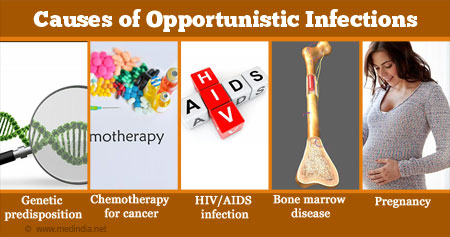
Opportunistic Infections Causes Symptoms Diagnosis Treatment Prevention
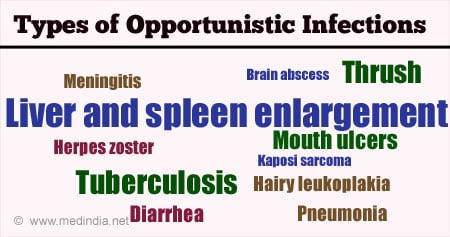
Opportunistic Infections Causes Symptoms Diagnosis Treatment Prevention
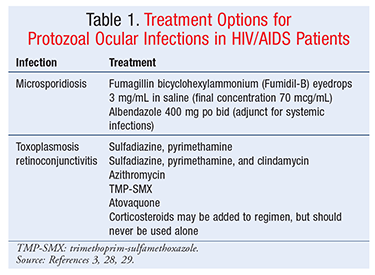
Ocular Diseases In Hiv Infection



0 Comments